

Db
Saphira Linux databaseDragon
Relational databases on infrastructure you control: choose SQLite, MariaDB or PostgreSQL, understand the access you need, and keep your data where it belongs.
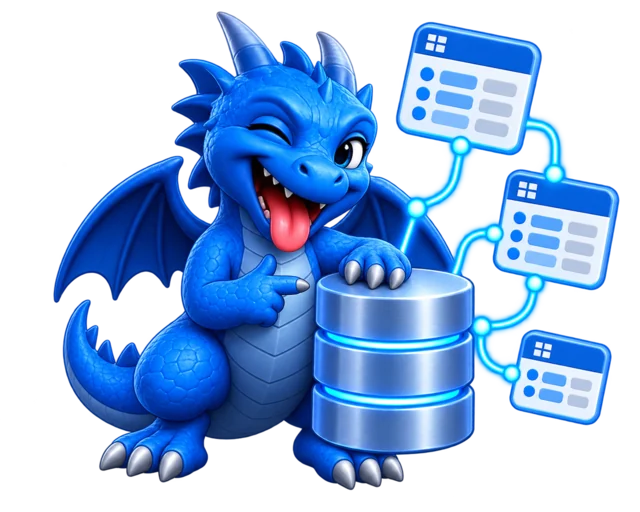
Your database, your data
databaseDragon is Saphira's database feature set. It makes running and managing relational databases on infrastructure you control simpler, without turning administration into another hosted SaaS control panel. You own the machine. You own the database. You own the data.
That machine may run at home, in an office, in a datacentre or elsewhere. AKADATA can manage a server for someone who wants that help, but it does not need to host the server. The important part is that the database remains on infrastructure chosen and controlled by its operator.
Relational data, briefly
A relational database stores information in tables. A table has columns that describe a kind of information and rows that hold individual records. Relationships connect those records: customers can have orders, and an order can contain products. That useful structure is why databaseDragon's artwork shows linked tables rather than a generic storage cylinder.
- Database: a named collection of related tables and other data.
- Table: a collection such as customers, orders or products.
- Row: one record in a table, such as one customer or order.
- Column: one property of each row, such as an email address or order date.
- User and privileges: the identity and permissions an application receives to work with the database.
A feature set, not a control panel
Saphira already provides the database software and the foundations to operate it. databaseDragon does not replace SQLite, MariaDB or PostgreSQL documentation, hide SQL behind a proprietary interface, or claim that planned automation has already arrived. It makes the choices and relationships coherent now, and leaves room for straightforward management helpers later.